Capturado
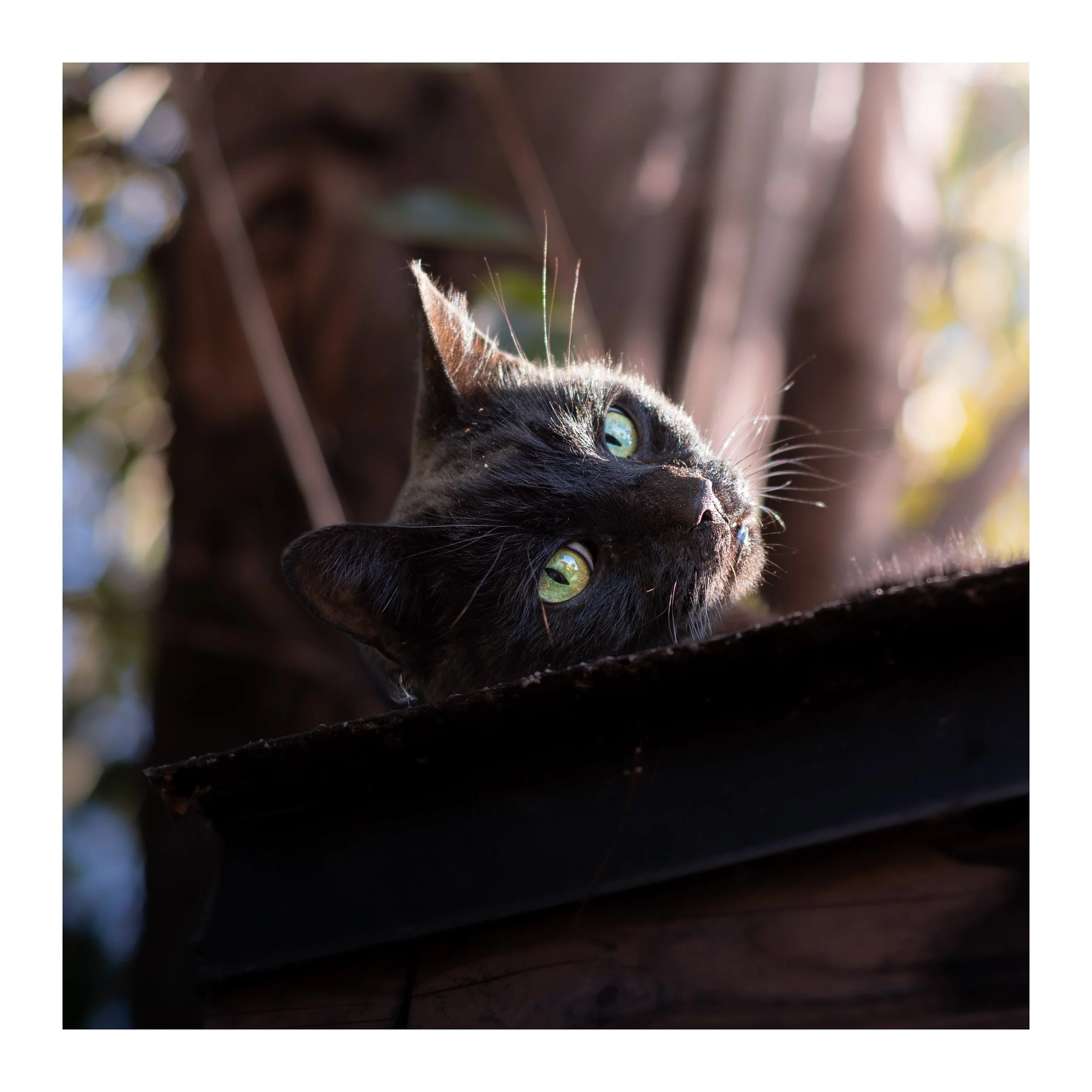
Su nombre es Jack, así a secas. Y no es que los gatos del vecindario deban tener apellidos, pero ese nombre tan común y tan corto —cuatro letras que, al pronunciarse en español, suenan a una onomatopeya— siento que le queda chico. Su mirada penetrante y perspicaz, capturada aquí con mi primera cámara semiprofesional (una Nikon D3500), me inició en un sendero fotográfico el cual aún no me canso de explorar.
Jack, a secas, era un habitante permanente de nuestro vecindario aquí en la ciudad de Stockton, California. Todos los residentes, al verlo deambular por los jardines de las casas de la vecindad, le saludábamos como se saluda a la persona que entrega el correo todos los días. Su presencia era un símbolo de estabilidad; la certeza de que las cosas seguían igual en el vecindario, aunque el mundo exterior estuviera en caos.
Lo más probable es que Jack (que debería ser más que así, a secas) no estuviera consciente del significado que su caminar lento y acompasado tenía para nosotros, los que compartimos su territorio y nos encargamos de limpiar sus jardines. Lo que sí sé, o por lo menos es lo que he escogido creer, es que Jack intuía que esas criaturas que limpian jardines buscamos algo que se nos está yendo todo el tiempo. Su mirada en la fotografía que tomé de él, disfrutando con calma la brisa de una tarde calurosa bajo la sombra de un árbol, es una que pregunta al observador: “¿Lo has encontrado?”
Jack —así a secas, aunque yo quisiera que fuera más, pero que probablemente a él no le importaba— abandonó este plano hace unos años atrás y su presencia se extraña en el vecindario. Sin embargo, desde ese día, cuando con mi nueva cámara buscaba formas y color sin un rumbo fijo, esa mirada me capturó. Desde entonces, y con cámara en mano, busco esos momentos en donde el signo y el significante se unen, sin querer, preguntándome: “¿Qué quieres que signifique todo esto?”
¿Por qué una mirada capturada en fotografía revela tanto? Porque el observador, con su mirada, quiere poseer sin vergüenza. Los seres humanos tendemos a evitar la mirada. La fotografía nos permite, como un fruto prohibido consumido en secreto, mirar desde lejos, poseer sin culpa. Después de todo, las pantallas o el papel fotográfico no preguntan, no miran de regreso. Y sin embargo, la imagen de la mirada del otro nos cautiva, en especial cuando viene de un animal que, sin la más mínima vergüenza, pregunta: “¿Qué busca ese objeto en mí?”
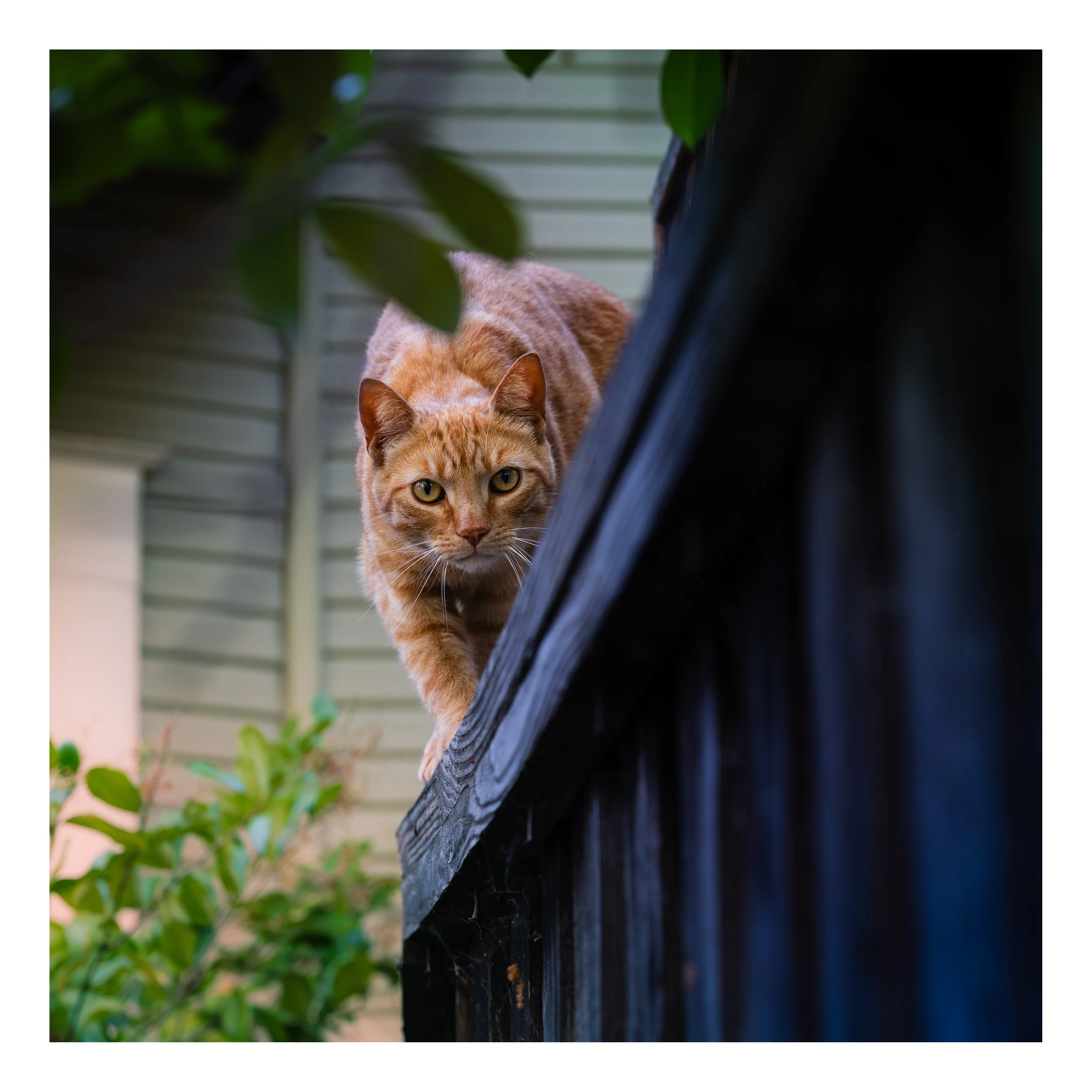
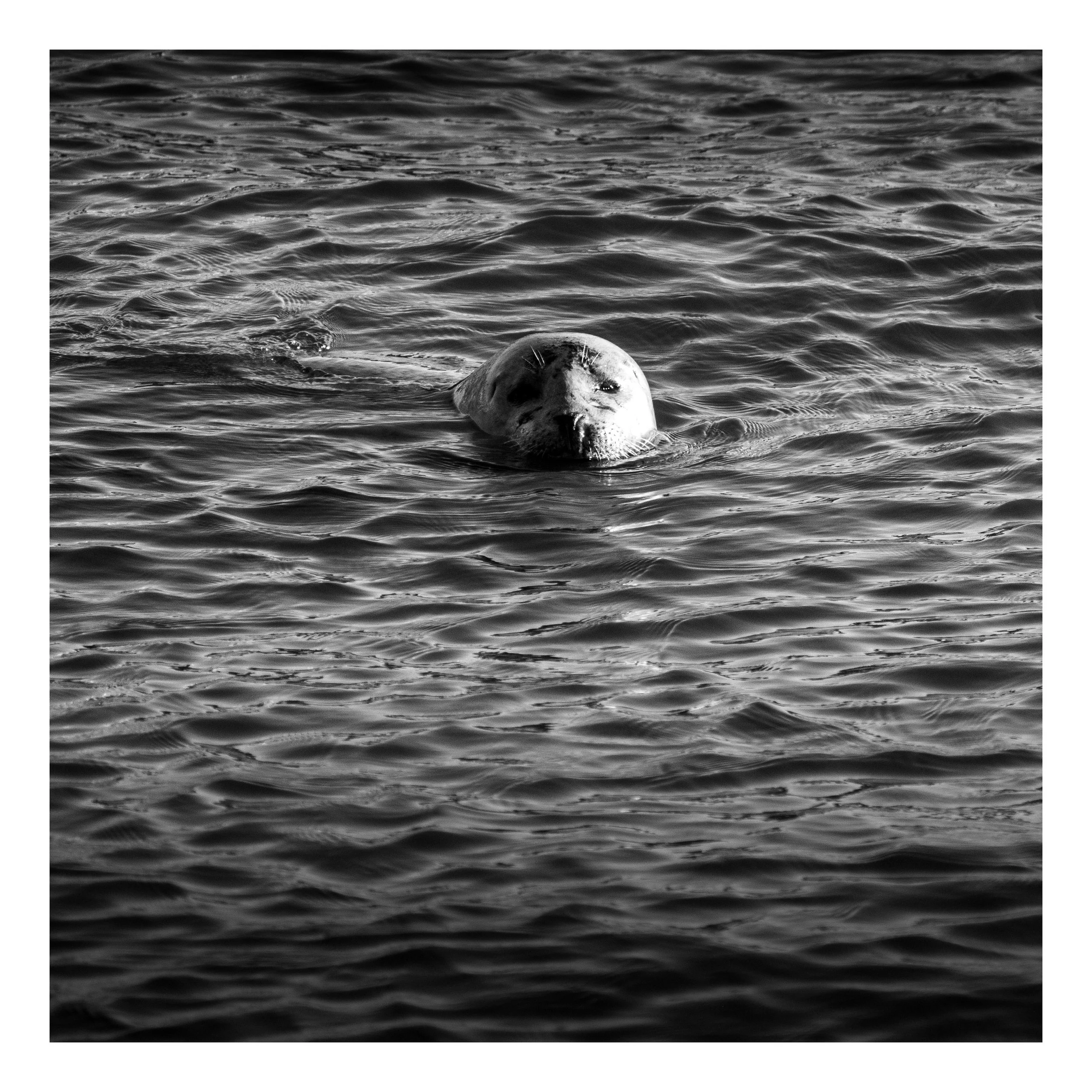
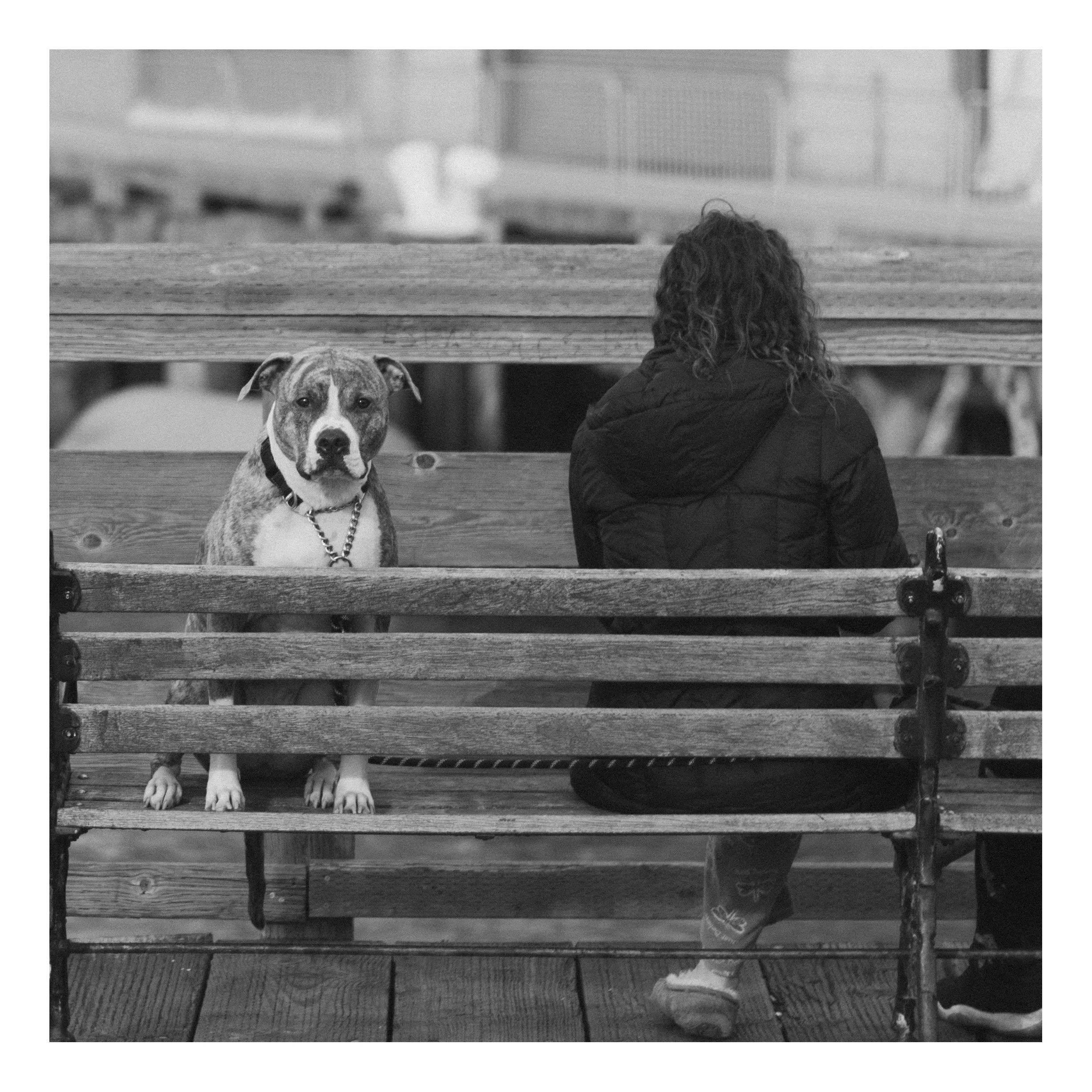
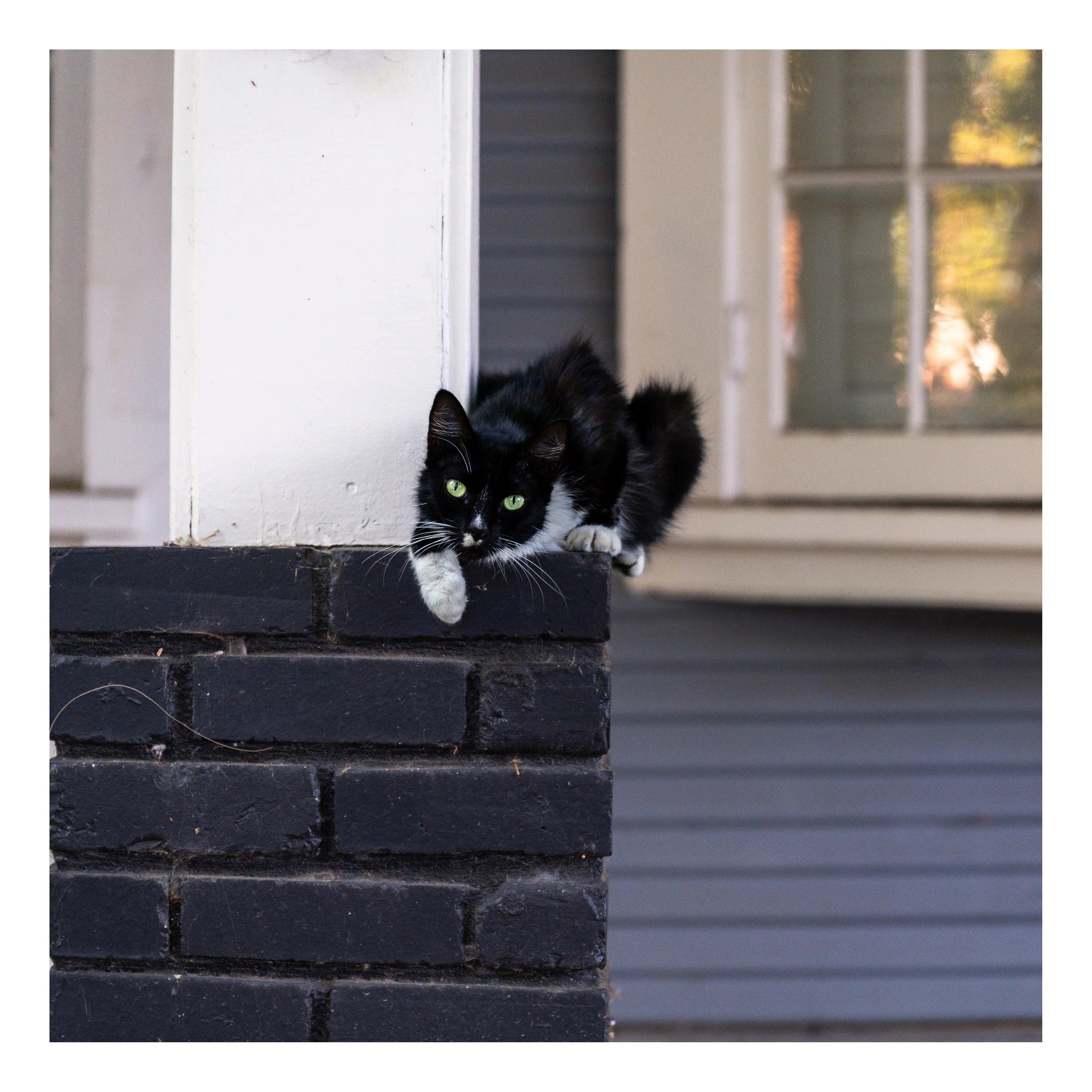
Para mí, esta búsqueda no terminó con Jack. Él fue el hierofante que, con su mirada, me indicó el camino a seguir con mi fotografía. He descubierto que, sin importar el escenario —ya sea un gato naranja que acecha desde la barandilla de un porche, un felino de frac blanco y negro suspendido sobre un muro de ladrillos, un perro que interrumpe la simetría de un banco de madera, o incluso la cabeza húmeda de una foca que emerge de la textura metálica del océano—, siempre busco el mismo instante de rendición: los momentos en que lo observado, fijo en la imagen, niega su desvanecer en el tiempo, forzando al símbolo a desintegrarse por sí mismo.
Jack fue un gato que me miró, a secas.
Captured
His name is Jack—just Jack, plain and simple. And it is not that neighborhood cats need last names, but that name, so common and so brief—four letters that, when pronounced in Spanish, sound like a sudden onomatopoeia—always felt too small for him. His piercing, perceptive gaze, captured here with my first semi-professional camera (a Nikon D3500), initiated me into a photographic path that I still never tire of exploring.
Jack, plain and simple, was a permanent fixture of our neighborhood here in the city of Stockton, California. All of us residents, upon seeing him wander through the gardens of the neighborhood houses, would greet him just as one greets the mail carrier every day. His presence was a symbol of stability; the certainty that things remained the same in our small corner of the world, even when the outside world was in chaos.
Most likely, Jack (who deserved to be so much more than just "plain and simple") was not aware of the meaning his slow, rhythmic stride held for those of us who shared his territory and tended to the gardens he frequented. What I do know, or at least what I have chosen to believe, is that Jack sensed that we garden-cleaners are searching for something that is constantly slipping away from us. His gaze in the photograph I took of him, quietly enjoying the breeze of a warm afternoon under the shade of a tree, is one that asks the observer: "Have you found it?"
Jack—plain and simple, though I wished it were more, but to which he probably paid no mind—left this world a few years ago, and his presence is missed in the neighborhood. Yet, since that day, when I wandered aimlessly with my new camera searching for form and color, that gaze captured me. Since then, camera in hand, I seek those moments where the sign and the signifier merge, unexpectedly, asking myself: "What do you want all of this to mean?"
Why does a gaze captured in photography reveal so much? Because the observer, through their gaze, wishes to possess without shame. We humans tend to avoid direct eye contact. Photography allows us, like a forbidden fruit consumed in secret, to look from afar—to possess without guilt. After all, screens or photographic paper do not question; they do not look back. And yet, the image of the other’s gaze captivates us, especially when it comes from an animal that, without the slightest hint of shame, asks: "What is that object seeking in me?"
For me, this quest did not end with Jack. He was the hierophant who, with his gaze, pointed out the path to follow with my camera. I have discovered that, no matter the setting—be it an orange cat stalking from a porch railing, a tuxedo-clad feline suspended over a brick wall, a dog disrupting the symmetry of a wooden bench, or even the wet head of a seal emerging from the metallic texture of the ocean—I am always searching for the same moment of surrender: those moments when the observed subject, frozen in the image, denies its own fading into time, forcing the symbol to disintegrate on its own.
Jack was a cat who looked at me, plain and simple.